Wildlife Removal Services for Your Home
A raccoon in the attic, bats in the gable, a snake in the basement: these problems rarely fix themselves, and they are not safe do-it-yourself jobs. Pest Control Services Nearby is a free connection service. We connect homeowners with independent local wildlife removal providers who inspect the problem, remove the animal humanely where the law allows, and seal the way it got in.
The line is answered 24/7. Describe the animal, or the sounds and signs if you are not sure which animal it is. That is enough to start.
Animal in the attic, walls or yard?
Describe the animal, or the sounds and signs if you are not sure which animal it is. That is enough to start. A provider can help identify it and explain what happens next.
The line is answered 24/7. Pest Control Services Nearby is a free connection service: providers are independent, we are not the treating company, and availability and prices vary by area.
Same-day and 24/7 emergency services are subject to provider participation, location, technician availability, and demand. Availability is not guaranteed and may vary by market and appointment capacity.
Match the sign to the animal
Most wildlife calls start with a sound, a smell or a pile of droppings, not a clear look at the animal. Use the table to narrow it down, then read the section for that animal. If you are still not sure, that is normal: describe what you have on the call and the provider will work it out during the inspection.
| Animal | Where you see or hear it | The sign that gives it away | Active | Section |
|---|---|---|---|---|
| Raccoon | Attic, roof, chimney | Heavy thumping at night, torn soffits, tipped bins | Night | Raccoons |
| Bat | Attic, walls, gable vents | Squeaking at dusk, droppings piling under the roost | Dusk and night | Bats |
| Squirrel | Attic, roofline | Scurrying in daylight, chewed entry holes | Day | Squirrels |
| Rat | Walls, kitchen, basement | Droppings along walls, gnaw marks, grease rub marks | Night | Rats |
| Mouse | Cupboards, walls, pantry | Tiny droppings, light scratching at night | Night | Mice |
| Skunk | Under decks and porches, the lawn | Spray smell, cone-shaped holes dug in the lawn | Night | Skunks |
| Opossum | Crawl space, under the house | Hissing when cornered, droppings near pet food | Night | Opossums |
| Snake | Basement, garage, crawl space | Shed skins, or the snake itself | Day and night | Snakes |
| Bird | Vents, chimneys, eaves | Chirping in a vent or flue, nesting material at the opening | Day | Birds |
| Mole | Lawn and garden beds | Raised ridges and volcano-shaped mounds of soil | Day and night | Moles |
Three steps between you and a quiet house
Call and describe it
Call (844) 434-2186 and describe what you have seen, heard or smelled. If you are not sure which animal it is, that is fine. The sounds, the timing and the signs are enough to start.
Get connected
We connect you with an independent local wildlife removal provider who covers your ZIP code and the animal involved.
The provider inspects, you decide
The provider inspects, explains the removal and exclusion plan and the cost, and you decide whether to go ahead. Nothing starts before you agree.
To be clear about who we are: Pest Control Services Nearby is a free connection service. We are not the treating company, and the providers we connect you with are independent businesses. Availability and prices vary by area. You can read the full process on our How It Works page.
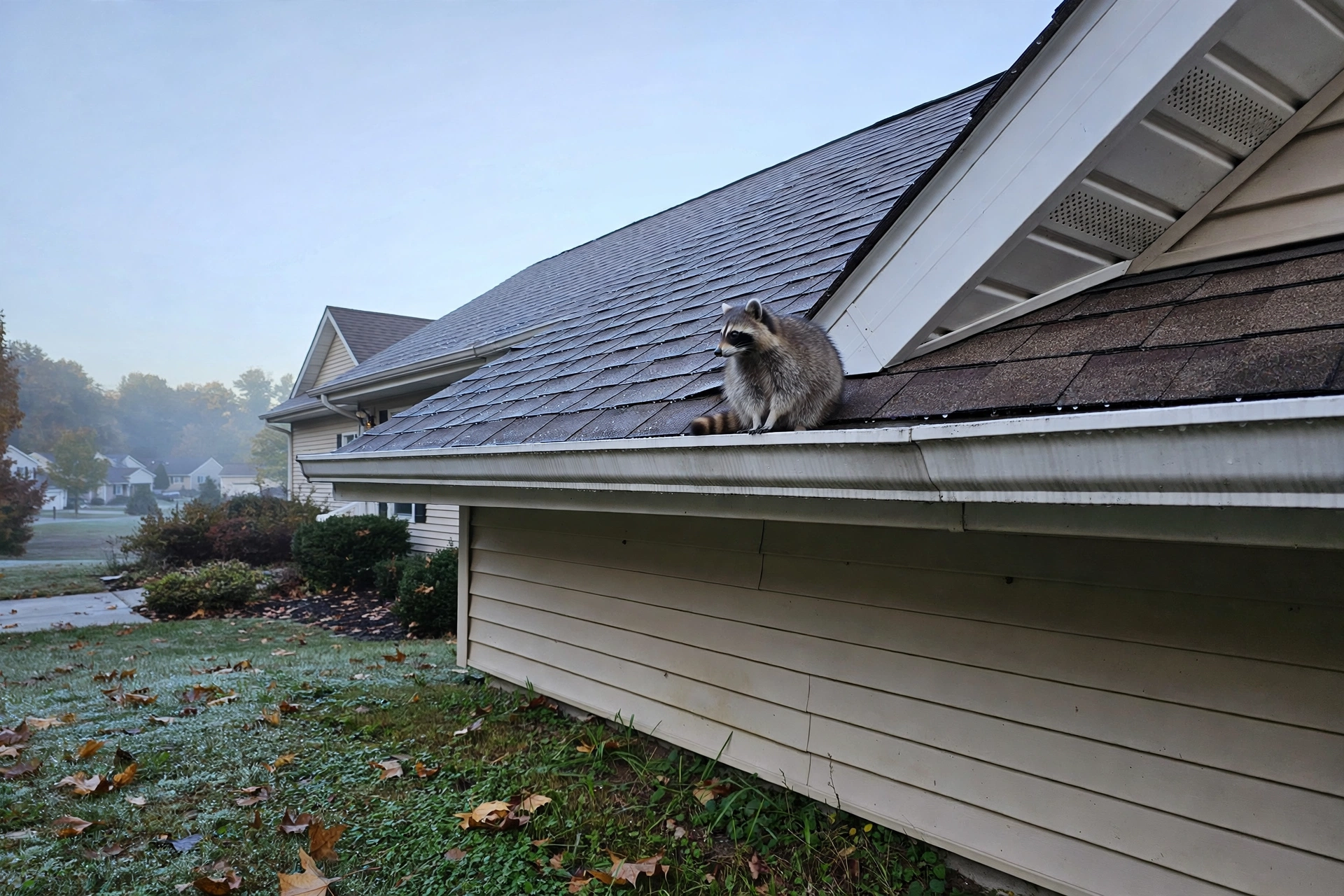
Raccoons in the attic, roof or chimney
Raccoons are the most common big animal in American attics. They are strong, curious and excellent climbers, and a loose soffit, a roof vent or a chimney without a cap is an open door. Once inside, the attic is warm, dry and safe, which is exactly why a female raccoon chooses it to raise young in spring.
Signs you have one
- Heavy thumping and slow walking in the attic, mostly at night, sometimes with chattering or chirping from young animals
- Torn soffits, bent roof vents, lifted shingles or a damaged chimney cap
- Tipped trash bins and scattered garbage
- Droppings on the roof, in the attic or at the base of a tree, often in one repeated spot (a latrine site)
- Hand-shaped paw prints in dust, mud or snow
Risks at real scale
Raccoons tear insulation and ductwork, soil the attic and chew stored items. The droppings need respect: raccoons are the primary host of raccoon roundworm, and the CDC notes that its eggs are passed in feces, take 2 to 4 weeks in the environment to become infective, and can survive for years. Human infection is rare, with 35 cases reported in the United States, but it can be severe. That is why latrine cleanup is a gloves-on professional job, not a bare-handed weekend task. A cornered raccoon can also bite. If a raccoon is out in daylight acting strangely, keep your distance, keep pets inside and call.
What removal involves
The provider inspects to find every entry point and to check whether young animals are present. Removal is usually humane trapping or one-way doors that let the raccoon leave and not return, followed by exclusion sealing of the other entry points and cleanup guidance for droppings and latrine sites. If a litter is in the attic, timing matters, and the provider works around the young rather than separating them from the mother.
Raccoon in the attic
Most raccoon calls are attic calls. The pattern is heavy movement after dark, quiet days, and noise that sounds too big to be a mouse or a squirrel. If you found droppings and are not sure which animal left them, our guide to cockroach droppings vs mouse droppings covers the common rule-outs before you decide.
What we connect you with: an independent local provider who handles raccoon trapping and exclusion, including the sealing work that stops the next raccoon from using the same door.
Health reference: CDC, About Raccoon Roundworm
Bats in the attic, walls or gable vents
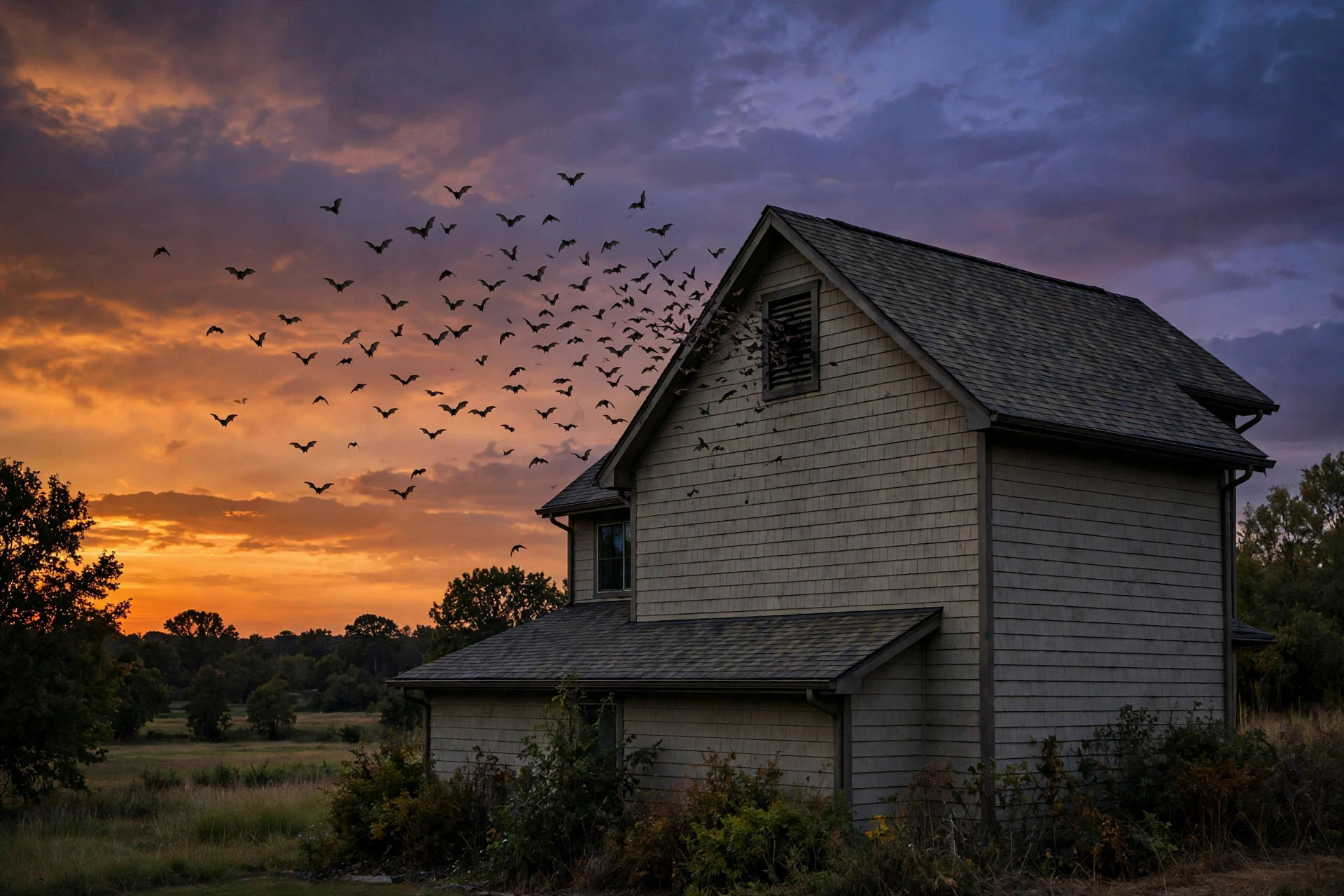
Bats enter through gaps as small as a pencil width, usually high on the house: gable vents, ridge caps, chimney flashing and loose fascia. A summer colony in the attic can grow quietly for a season before the signs are obvious.
Signs you have them
- Squeaking, chattering or light scratching in walls or the attic around dusk
- Droppings (guano) piling up under a roost point, or dark streaks below a vent or gap
- Bats seen leaving the roofline at dusk, one after another
- A bat found inside a living space
Risks at real scale
Guano builds up in attics and should not be disturbed without protection. Bats are also a rabies vector species: the CDC reports about 4,000 animal rabies cases in the United States each year, more than 90 percent of them in wildlife, and bats account for about 35 percent of reported cases. Most bats are healthy and want nothing to do with people, but an exposure is handled seriously and quickly.
What removal involves
Bat removal is exclusion, not trapping. The provider finds every entry point, fits one-way exclusion devices on the active ones so the bats leave at dusk and cannot get back in, then seals the house once the roost is empty. Sealing a roost shut with bats inside is never the method: it traps animals in the walls and breaks the law in many states.
What we connect you with: an independent local provider who does bat exclusion and sealing, and who will tell you honestly if the season means waiting.
Health reference: CDC, Rabies in the United States
Squirrels in the attic or roofline
Squirrels are daytime animals, which makes them the easiest attic animal to identify by timing alone. If the scurrying starts in the morning and again in the late afternoon, and stops at night, you are almost certainly hearing squirrels.
Signs you have them
- Fast scurrying and rolling sounds in the attic during the day
- Chewed entry holes at the roofline, soffits or gable vents
- Nests of leaves, twigs and shredded insulation in the attic
- Droppings and a strong urine smell in one corner of the attic
Risks at real scale
The serious risk is chewed wiring, which is a genuine fire concern, stated calmly: squirrels chew constantly to keep their teeth worn down, and electrical insulation is one of the things they chew. Add damaged insulation and soiled nesting areas, and a squirrel problem gets more expensive the longer it runs.
What removal involves
The provider fits one-way exclusion doors over the entry holes, uses trapping where it is permitted, and seals every entry point but one until the attic is clear. Then the last door comes off and the final hole is sealed. Sealing everything at once, with squirrels still inside, just moves the problem into the walls.
If you want the full picture before you call, our guide to squirrels in the attic walks through the entry points, the sealing method and the honest point where DIY stops.
What we connect you with: an independent local provider for squirrel exclusion and entry-point sealing.
Rats in the walls, kitchen or basement
Rats follow food, water and shelter, and a house offers all three. Roof rats work the attic and upper walls; Norway rats work basements, crawl spaces and ground floors. Either way, seeing one rat usually means more are travelling the same routes.
Signs you have them
- Droppings along walls, in cupboards and near food storage
- Gnaw marks on wood, packaging, pipes and wiring
- Dark grease rub marks along the routes they travel every night
- Scratching, scurrying or thumping in walls after dark
- Burrows along the foundation or under sheds and decks
Risks at real scale
Rats contaminate food and food surfaces, chew wiring and plumbing, and keep coming while the entry points and food sources stay open. A trap or two catches individuals; it does not close the routes the colony is using.
What removal involves
A proper rat job is a programme, not a single visit: a trapping plan over repeat visits, entry-point exclusion so new rats cannot replace the ones removed, and sanitation steps covering food storage, waste and harborage. For the exclusion method in depth, see our Tacoma rat exclusion and foundation sealing guide, which walks through how the sealing half of the job is done.
What we connect you with: an independent local provider for rat trapping and exclusion.
Mice in the cupboards or walls
Mice are the one animal on this page that many homeowners start on their own, and DIY trapping genuinely catches mice. What it does not do is find and close the gaps they are walking through, and mice can fit through openings about the width of a pencil.
What a professional visit adds
A provider works the whole problem: finding the entry points around pipes, vents, garage doors and foundations, sealing them, running a trapping programme sized to the infestation, and advising on the food and storage habits that keep mice interested. For identification, droppings and trapping method in full, see our mouse extermination and trapping guide.
What we connect you with: an independent local provider for mouse trapping and entry-point sealing, for the homes where the problem has outgrown a few snap traps.
Skunks under the deck, porch or shed
Skunks are quiet tenants until they are not. Most skunk calls start with the smell, or with a dog that found the skunk first. A skunk denning under a deck or porch will stay for a season if the space is left open.
Signs you have one
- A strong spray smell near the house, especially in the evening
- Neat cone-shaped holes dug across the lawn where the skunk hunts grubs
- A gap or dug entrance under a deck, porch, shed or step
- Tracks and droppings near the den entrance
Risks at real scale
Being sprayed is a miserable week, not an injury, and most spray incidents involve a curious dog rather than a person. The more serious point is that skunks are a rabies vector species: the CDC puts skunks at about 17 percent of reported wildlife rabies cases in the United States. So no cornering, no handling, and keep dogs on a leash at night while a skunk is denning on the property.
What removal involves
The provider fits a one-way door over the den entrance so the skunk leaves at night and cannot get back under, or traps it where a licensed provider is permitted to. Once the den is empty, the deck, porch or shed gap is sealed or screened so the next skunk cannot move in.
What we connect you with: an independent local provider for skunk removal and den exclusion.
Health reference: CDC, Rabies in the United States
Opossums under the house or in the crawl space
Opossums wander in through open crawl space vents, broken lattice and gaps under steps, and settle where it is dark and quiet. They are the least dramatic animal on this page, and the honest advice is that removal is about exclusion, not panic.
Signs you have one
- Slow, heavy noises under the house at night
- Droppings near outdoor pet food or trash
- Hissing, or an animal playing dead, when one is cornered
- Pet food bowls emptied overnight
Risks at real scale
Opossums rarely bite unless they are grabbed, and they mostly want to be left alone. The real issues are droppings near pet areas, the smell if one dies under the house, and the open access point that will admit the next animal. Keep pet food hygiene tight while one is around.
What removal involves
The provider traps and releases the opossum following state rules, seals the access point it was using, and the food source comes inside at night so the property stops advertising itself.
What we connect you with: an independent local provider for opossum trapping and access sealing.
A snake in the house, garage or yard
First, the only step that matters right now: do not approach it. Keep children and pets inside, keep an eye on where it goes from a safe distance, and note what it looked like, or take a photo from well back. Then call.
Signs you have one
- A shed skin in the basement, garage or crawl space
- A snake seen in the basement, garage, woodpile or yard
- Rodent activity dropping suddenly, because snakes follow their food
Risks at real scale
Most snakes found in and around houses are not venomous, and most want to avoid you as much as you want to avoid them. But identification from a distance is the professional's job, not the homeowner's, and a cornered snake of any kind can bite. Treat every unidentified snake as one to keep away from until a handler has named it.
What removal involves
A licensed handler locates and removes the snake safely. After that, the lasting half of the job is the fixes that stop the next one: sealing gaps at the foundation and around pipes, and clearing the harborage snakes and their prey shelter in, such as wood piles, tall grass and debris against the house.
What we connect you with: an independent local provider with a licensed snake handler.
Birds nesting in vents, chimneys or eaves
Birds choose the warm, sheltered spots a house offers: bathroom and dryer vents, chimneys, and gaps under the eaves. A nest in a vent blocks airflow, fills the duct with nesting material and droppings, and is noisy at dawn.
Signs you have them
- Chirping from inside a vent, wall or chimney flue
- Nesting material sticking out of a vent opening
- Droppings below the entry point
- Birds flying to and from one spot on the house all day
What removal involves
The provider inspects the nest and its timing, removes birds and nesting humanely and at the point the law allows, cleans out the vent or flue, and fits vent screens or a chimney cap to close the route.
What we connect you with: an independent local provider for bird exclusion, vent screening and chimney caps.
Moles tearing up the lawn
Moles are the only animal on this page that is not a house problem at all. They live underground in the yard, they do not come into houses, and they do not bite people. The problem they cause is entirely in the lawn and the garden beds.
Signs you have them
- Raised ridges running across the lawn where tunnels sit just under the surface
- Volcano-shaped mounds of loose soil
- Soft, spongy ground in beds and borders
Risks at real scale
Lawn and bed damage, and nothing more serious than that. The honest frustration is that the damage keeps spreading while the mole keeps feeding, and most of the products sold to stop it do not work.
What removal involves
Trapping on the active tunnels is the method that works: the provider identifies which runs are in use and sets traps there. Repellents, vibrating gadgets and home remedies have weak evidence behind them, and we would rather tell you that than sell you a call on a promise. Where moles are one part of a bigger yard pest picture, the provider will say so.
What we connect you with: an independent local provider for mole trapping.
Not sure which animal it is?
Describe the sounds, the signs or the smell, and when they happen. That is enough to start, and the provider confirms the animal at the inspection.
The line is answered 24/7. Pest Control Services Nearby is a free connection service: providers are independent, we are not the treating company, and availability and prices vary by area.
Same-day and 24/7 emergency services are subject to provider participation, location, technician availability, and demand. Availability is not guaranteed and may vary by market and appointment capacity.
Inspection first, then removal, then sealing
Every good wildlife job follows the same order, whatever the animal. Removal without sealing is a subscription: the next animal uses the same door within the season.
Find the animal and its doors
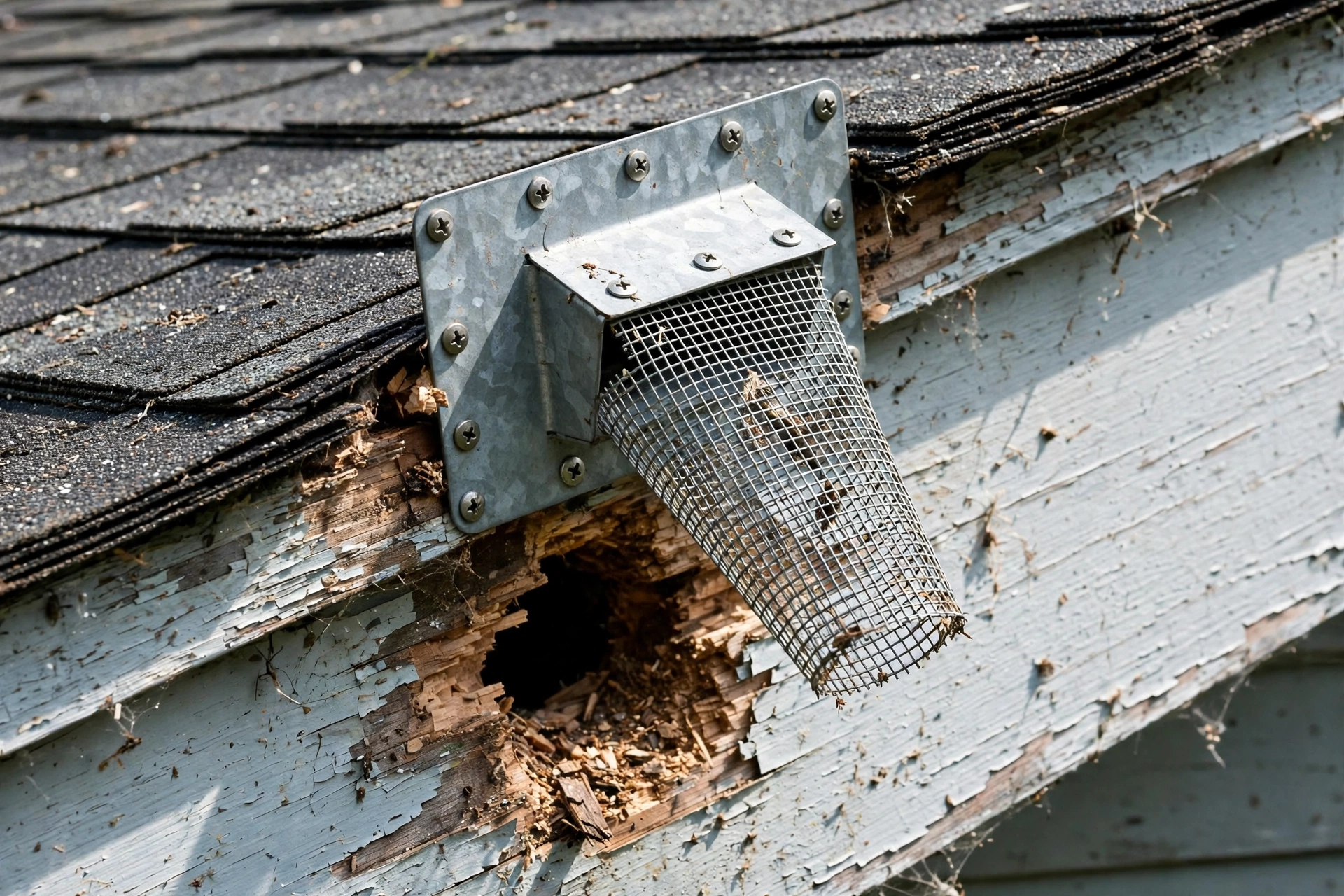
The provider identifies the species, finds every entry point, and checks whether young animals are present.
Humane capture or one-way out
Trapping or one-way exclusion devices, used where the law allows and timed around young animals and protected species.
Close the entry points
Soffits, vents, gaps and screens are repaired so the animal, and the next one, cannot get back in.
Cleanup where it is needed
Attic or crawl space cleanup where droppings or nesting are present, with the protection the material requires.
Your part, before and after
- Keep people and pets clear of the animal, its droppings and its entry point until the provider has been
- Do not handle the animal, and do not block its exit route before the visit
- Bring pet food indoors at night and secure trash
- Keep the attic or crawl space access clear for the inspection
Sealing gaps, tidying food sources and yard cleanup are homeowner jobs once the animal is out. Handling, trapping and protected species are licensed work in many states, and that line is where DIY stops. For the sealing half of the job in depth, see how crawl space sealing keeps rodents and wildlife out for good.
A dead animal in a wall or attic is a different problem
Sometimes there is no live animal at all: something has died in a wall void or the attic, and the only sign is the smell. It builds over the first days, peaks, and then fades over a period of weeks. The hard part is locating the carcass, because the strongest smell in a room is rarely where the animal actually is.
Our guide to dead mouse smell covers the timeline and what actually helps. If you would rather have it located and removed, that is a normal call for a wildlife provider.
Call for Help: (844) 434-2186The honest safety picture
- Never handle a wild animal yourself, and never handle droppings with bare hands. Keep children and pets away from the animal, its droppings and its entry point until a provider has been.
- Rabies at real scale: bats, raccoons and skunks can carry rabies. The CDC reports about 4,000 animal rabies cases in the United States each year, more than 90 percent of them in wildlife, with bats at about 35 percent of reported cases, raccoons at 29 percent and skunks at 17 percent. Most animals a homeowner sees do not have rabies. But any bite or scratch from a wild animal, or a bat found in a room with a sleeping person, a child or a pet, means calling your local health department or doctor for advice that same day.
- Protected species honesty: bats and most wild birds are legally protected, and many states license wildlife removal and set the seasons and methods allowed. Providers work under those rules. Where the law requires waiting, such as bat maternity season or an active bird nest, the provider will say so, and this page has said so first.
- Permits and licensing sit with the provider. Before any work starts, verify that the provider carries the license and insurance your state requires for the work being performed.
Health references: CDC, Rabies in the United States · CDC, About Raccoon Roundworm · CDC, Raccoon Roundworm surveillance summary
National coverage, confirmed by ZIP code
The wildlife line covers a national footprint of 38,588 ZIP codes through independent local providers. We do not claim a local office or a local team in any city, because that would not be true. What we can say is that coverage reaches most of the country, and whether a participating provider covers your ZIP code and your animal is confirmed on the call. You can also see the areas the wider site serves on our Service Areas page.
Questions homeowners ask before they call
How much does wildlife removal cost?
It depends on the animal, where it is in the house, how much entry-point sealing the home needs, and whether young animals are present. We do not quote prices, because any number given before an inspection would be a guess. The provider inspects, explains the full cost, and you decide before any work starts.
Who do I call for a raccoon in my attic?
Call (844) 434-2186 and describe what you have been hearing and seeing. We connect you with an independent local provider who handles raccoon trapping or one-way exclusion and the sealing work that follows.
Can I remove a raccoon, bat or skunk myself?
Parts of the job are reasonable DIY once the animal is out: sealing gaps, screening vents, tidying food sources. Handling and trapping wild animals, and anything involving protected species such as bats, is licensed work in many states and carries bite and disease risks. That is the honest line where DIY stops.
Are bats protected? When can bats be removed?
In many states, yes. Bats are protected, and exclusion during the maternity season, when flightless pups are in the roost, is restricted or illegal in many states. A licensed provider will check the season and the roost, and if the law requires waiting, they will schedule the exclusion for the first legal window and seal what can be sealed in the meantime.
There is a snake in my house. What do I do right now?
Do not approach it. Get children and pets into another room or inside the house, keep eyes on the snake from a safe distance if you can do so safely, and note what it looked like or take a photo from well back. Then call (844) 434-2186 and we will connect you with a provider who has a licensed handler.
Will the animal be killed?
Humane methods come first: one-way exclusion doors, live trapping and release where the law allows. Relocation rules vary by state, and some animals cannot legally be relocated. The provider follows your state's rules and will explain the method before starting.
Do you remove dead animals?
Providers we connect you with do locate and remove dead animals from attics, walls and crawl spaces. If you are deciding whether to wait it out, our guide to dead mouse smell covers how long the smell lasts and what helps while it fades.
How do I stop animals coming back?
Exclusion. Removal without sealing is temporary, because the next animal uses the same entry point. The lasting fix is sealing soffits, vents, gaps and screens once the animal is out, and removing the food and shelter that made the house attractive.
Is wildlife removal available where I live?
The wildlife line covers a national footprint of 38,588 ZIP codes through independent local providers, so coverage reaches most of the country. Whether a participating provider covers your ZIP code and your animal is confirmed on the call.
I hear noises but I do not know what animal it is. Can you still help?
Yes. Describe the sound, when you hear it and where it seems to come from: that pattern identifies most attic animals. Our guide to scratching noises in the attic at night can help you narrow it down first, and the provider confirms the animal at the inspection either way.
Are skunks dangerous?
At real scale: the spray is miserable but not an injury, and most incidents involve dogs, not people. Skunks are also a rabies vector species, at about 17 percent of reported wildlife rabies cases in the United States, so the rule is simple: no cornering, no handling, and dogs on a leash at night while one is around.
Does the provider need a licence or permit?
In many states, yes: wildlife removal is licensed, and protected species carry their own permits and seasons. Providers are responsible for their licensing, and it is your right and responsibility as the homeowner to verify the licence and insurance for the work being performed.
Ready to get the animal out?
Describe the animal, or the sounds and signs if you are not sure which animal it is. That is enough to start, and a provider can explain the removal and exclusion plan before anything begins.
The line is answered 24/7. Pest Control Services Nearby is a free connection service: providers are independent, we are not the treating company, and availability and prices vary by area.
Service Disclaimer: Pest Control Services Nearby is a free service to assist homeowners in connecting with local service providers. All contractors/providers are independent and Pest Control Services Nearby does not warrant or guarantee any work performed. It is the responsibility of the homeowner to verify that the hired contractor furnishes the necessary license and insurance required for the work being performed. All persons depicted in a photo or video are actors or models and not contractors listed on Pest Control Services Nearby.
Same-day and 24/7 emergency services are subject to provider participation, location, technician availability, and demand. Availability is not guaranteed and may vary by market and appointment capacity.