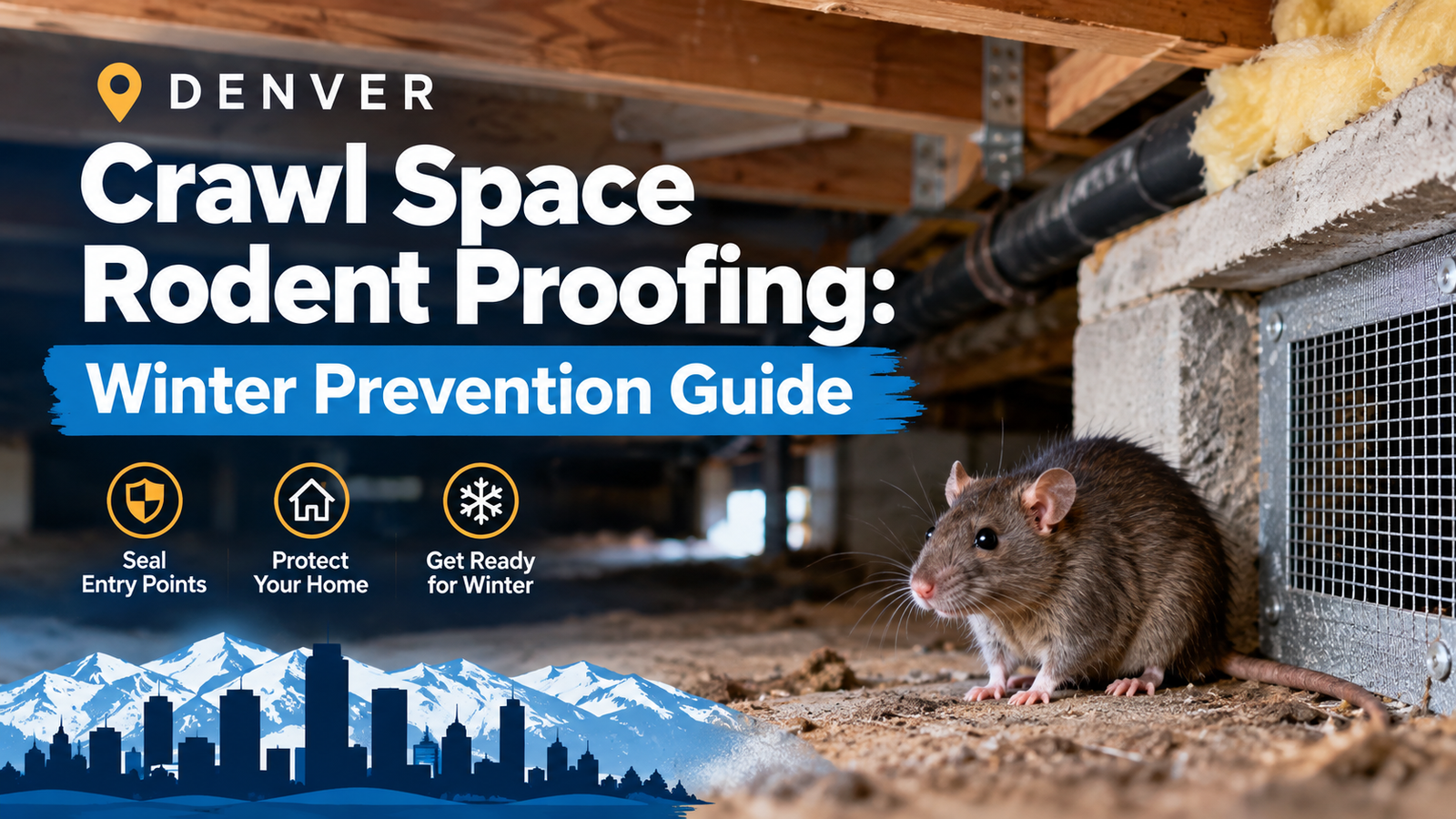
When freezing winter winds sweep across Colorado’s Front Range, wild mice and rats actively seek warm shelter within residential crawl spaces and subfloors. Leaving foundation vents and utility penetrations unsealed allows rodents to nest in subfloor insulation, contaminate indoor air, and gnaw electrical wiring. Achieving permanent protection requires professional structural exclusion tailored to Denver’s high elevation climate.
📍 Local Service Area Note
This guide provides specialized winter exclusion protocols for homeowners across the Denver metropolitan area, including Aurora, Lakewood, Littleton, Centennial, and Highlands Ranch. If you need immediate rodent control assistance, visit our Denver pest control services landing page to check local provider availability by ZIP code.
Understanding how freezing temperatures drive rodents indoors ensures timely property protection. Consequently, implementing physical exclusion before heavy snowfall prevents severe structural damage and costly subfloor restoration.
IN THIS GUIDE:
- Why Front Range winter drives rodents into Denver crawl spaces
- The science of Denver crawl space rodent proofing vs. DIY repellents
- Step by step crawl space sealing and rodent exclusion in Denver
- Health risks and fire hazards of unsealed Denver subfloors
- Connecting with local Denver rodent control specialists
Why Front Range Winter Drives Rodents into Denver Crawl Spaces
Winter in the Denver metro area brings extended freezing spells and sudden temperature drops. As outdoor food sources disappear under snow cover, field mice and roof rats search for heated building foundations. Heat escaping through subfloors and unsealed crawl space vents attracts wild rodents directly to your foundation edges.
- Thermal Gradient Attraction: Warm air leaking from subfloor ductwork creates a thermal beacon that guides mice toward foundation openings.
- Subfloor Insulation Destruction: Rodents pull down fiberglass insulation batts to build warm winter nests, drastically increasing home heating bills.
- Continuous Electrical Wire Gnawing: Rodent teeth grow continuously, driving mice to chew plastic insulation off electrical wiring inside wall voids and subfloors.
Fact: A house mouse can squeeze through an entry hole just 1/4 inch wide (the width of a standard pencil). Therefore, complete physical proofing is necessary to keep pests out.
The Science of Denver Crawl Space Rodent Proofing vs. DIY Repellents
Many homeowners attempt natural home remedies such as peppermint oil sprays or ultrasonic sound devices. However, official guidelines from the US Environmental Protection Agency (EPA) emphasize that physical exclusion and structural maintenance are far superior to temporary scent or sound deterrents.
Cold winter drafts quickly dissipate essential oil aromas, while high frequency sound waves cannot pass through subfloor joists or dense insulation. Consequently, invading rodents easily bypass scent borders through wall voids to reach warm living spaces above.
Step by Step Crawl Space Sealing & Rodent Exclusion in Denver
Implementing effective CDC recommended rodent sealing protocols requires a systematic inspection of your property perimeter from foundation to roofline.
1. Inspecting Foundation Vents & Pipe Penetrations in Denver Homes
Begin by checking all exterior foundation vents, crawl space doors, air conditioning line penetrations, and outdoor gas connections. Older homes in Denver neighborhoods like Park Hill, Wash Park, and Highland often feature settled foundations with gaps around brickwork and rim joists.
2. Sealing Subfloor Entry Gaps with Galvanized Steel Mesh
Pack all gaps smaller than 1 inch tightly with copper mesh or heavy steel wool. Cover larger openings and foundation vents with 1/4 inch heavy galvanized hardware cloth secured with masonry screws. Finish with high grade exterior silicone caulk or expanding foam over the steel mesh to eliminate cold drafts.
3. Managing Humidity in Damp Denver Crawl Spaces
Melting snow and poor soil slope can cause moisture build up beneath subfloors. Installing a thick 6 mil vapor barrier across exposed dirt crawl space floors reduces subfloor humidity and eliminates damp harborages that attract pests.
Health Risks & Fire Hazards of Unsealed Denver Subfloors
Ignoring rodent activity in your crawl space carries serious long term risks. In addition to chewing electrical cables (which causes up to 25% of unexplained home fires), rodents accumulate urine and droppings in subfloor insulation.
⚠️ CDC Safety & Disinfection Protocol
Follow official CDC rodent cleanup guidelines when entering subfloors:
- Never sweep or vacuum dry rodent droppings, as airborne dust can spread pathogens.
- Wear rubber gloves and a protective respiratory mask before entering confined crawl spaces.
- Thoroughly saturate droppings and nesting materials with an EPA registered disinfectant for 5 minutes before wiping up.
- Double bag all waste materials securely and wash hands thoroughly with soap and water.
Connecting with Local Denver Rodent Control Specialists
Proactive structural exclusion represents the most reliable, permanent method to safeguard your subfloor against Front Range winter pest invasions. For additional technical exclusion insights, read our regional guide on Crawl Space & Attic Sealing in Seattle or explore our Tacoma Ultrasonic Crawl Space Guide.
Do not wait for freezing weather to compromise your home heating and insulation. Check your ZIP code on our Service Areas Hub or connect with a licensed local Denver rodent proofing expert today.
⚖️ Important Service Disclaimer
PestControlServicesNearby.com offers a free service to assist homeowners in connecting with independent local contractors. PestControlServicesNearby.com does not warrant or guarantee any work performed. Therefore, homeowners must independently verify that hired contractors hold all necessary state licenses and insurance required for the work being performed. Furthermore, individuals depicted in photos or videos are actors or models rather than listed contractors.