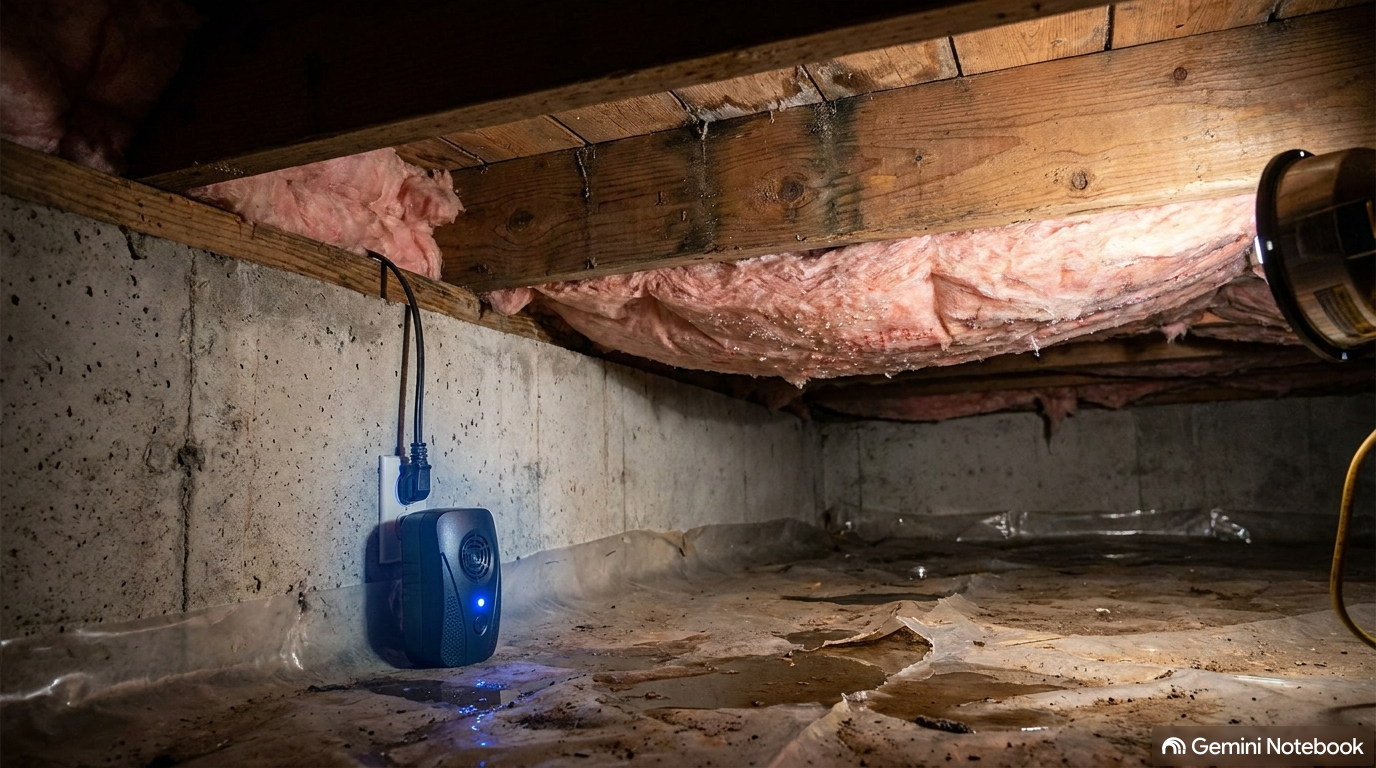
When evaluating effective tacoma crawl space rodent control, many homeowners plug in ultrasonic pest repellers as a quick fix. Consequently, these electronic devices emit high frequency sound waves to scare away mice. However, plug in repellers consistently fail to solve crawl space rodent problems in Tacoma and Pierce County.
📍 Local Service Area Note
Specifically, this guide helps homeowners in Seattle, Tacoma, and the surrounding Puget Sound region. For instance, you can check local provider availability directly on our Tacoma Pest Control Services page if you suspect active rodents in your foundation.
Therefore, you must understand why these devices fail in damp Puget Sound weather. As a result, stopping rodents protects your home from severe structural damage and health hazards.
1. Why Plug In Devices Fail at Tacoma Crawl Space Rodent Control
In theory, ultrasonic devices emit sound waves above 20,000 Hertz to confuse pests. Indeed, high frequency sounds startle mice in open rooms. Nevertheless, physical obstacles block acoustic waves in real homes:
- Sound Wave Absorption: First, high frequency sound waves travel like light and cannot penetrate solid barriers. For example, fiberglass insulation, plywood subfloors, floor joists, and boxes absorb acoustic energy in Tacoma crawl spaces.
- Acoustic Shadowing: Second, sound waves cannot bend around corners or pass through wood. Consequently, obstacles create large acoustic shadows. As a result, mice simply shelter behind ductwork, inside wall voids, or deep within damp insulation.
- Behavioral Habituation: Finally, rodents quickly adapt to repetitive background noise. Furthermore, once mice realize the sound presents no physical threat, they ignore it completely. Meanwhile, winter cold pushes them to seek warm subfloor spaces.
Fact: In fact, mice will not abandon warm subfloor shelter just because a device hums in a wall outlet. Therefore, you must seal physical entry points to achieve permanent rodent control.
2. How Puget Sound Rainfall Demands Tacoma Crawl Space Pest Control
Specifically, Tacoma wet maritime climate drives rodent activity. For instance, autumn and winter rains push wild rodents off greenbelts into warm residential crawl spaces and attics.
In addition, relying on ineffective repellers while mice occupy subfloors causes severe damage:
- Electrical Fire Hazards: First, rodent teeth grow continuously. Consequently, mice gnaw hard plastic insulation on electrical wires to trim their teeth. As a result, rodent gnawing causes up to 25% of unexplained house fires nationwide.
- Insulation Destruction: Second, mice shred subfloor insulation to build nests. Furthermore, they contaminate remaining fiberglass with urine and feces. Therefore, replacing destroyed crawl space insulation costs between $2,000 and $4,000.
- Economic Burden: Overall, rodents cost U.S. property owners an estimated $19 billion every year. For example, severe infestations requiring full insulation replacement cost $5,000 to $20,000. Conversely, proactive structural exclusion costs only $250 to $1,500.
3. Proven Tacoma Crawl Space Rodent Control Strategies
For this reason, the Environmental Protection Agency and the Centers for Disease Control and Prevention recommend structural exclusion. In particular, Integrated Pest Management relies on physical barriers rather than ineffective sounds or scents.
Specifically, official CDC rodent prevention guidelines state an adult mouse squeezes through a gap measuring 1/4 inch or 6 millimeters. For example, this opening equals the width of a standard number 2 pencil. Thus, any hole accepting a pencil grants mice entry to your crawl space.
🛠️ The 4 Step CDC Crawl Space Rodent Sealing Protocol
- Inspect High Risk Junctions: First, check crawl space doors, vent screens, rim joists, and utility pipe penetrations in your foundation.
- Fill Small Gaps with Steel Wool: Next, pack small holes tightly with heavy steel wool because rodents cannot chew steel mesh without hurting their jaws.
- Caulk and Seal: Then, apply expanding foam or exterior caulk over steel wool to lock it in place and block air leaks.
- Cover Large Openings with Hardware Cloth: Finally, secure 1/4 inch galvanized hardware cloth or metal flashing over foundation vents and large openings.
4. Safe Rodent Cleanup Protocols for Tacoma Homeowners
Crucially, never sweep or vacuum dry rodent droppings in your Tacoma crawl space or home.
Specifically, the Washington State Department of Health identifies deer mice as primary carriers of Sin Nombre virus. Indeed, this virus causes Hantavirus Pulmonary Syndrome, an airborne illness with a 35% mortality rate in Washington State.
⚠️ Washington DOH Hantavirus and Rodent Disinfection Protocol
- First, put on rubber or plastic gloves before touching contaminated areas.
- Next, spray urine, droppings, and nests with EPA registered disinfectant or bleach solution containing 1.5 cups bleach per gallon of water.
- Then, allow disinfectant to soak for 5 minutes before wiping.
- Afterward, wipe waste with paper towels, double bag waste in plastic bags, and throw it in an outdoor trash container.
- Finally, wash gloved hands with soap and water before removing gloves and wash bare hands thoroughly.
5. Permanent Tacoma Crawl Space Rodent Exclusion and Protection
In summary, electronic repellers offer false security while rodents nest and gnaw electrical lines beneath your floors. Ultimately, permanent tacoma crawl space rodent control requires sealing every foundation opening with professional exclusion materials.
Therefore, do not wait for structural damage to escalate if you suspect rodents in Pierce County. Connect with a licensed Tacoma rodent exclusion specialist to schedule a foundation inspection and crawl space sealing today.
One Response