Yes, Western Black Widows (Latrodectus hesperus) are native to Washington State, but they are primarily concentrated in dry, eastern regions like Yakima, Spokane, and the Tri-Cities. While rare in humid Western Washington and Seattle, black widows occasionally hitchhike in firewood, construction materials, or nest in dry, undisturbed garages, crawl spaces, and woodpiles.
Finding a glossy black spider in your basement or garage can immediately cause concern. Homeowners across the Pacific Northwest frequently ask: are there black widows in Washington State, and how dangerous are they to children and pets?
While Washington is home to dozens of harmless spider species, the Western Black Widow is the state’s primary venomous spider of medical importance. Understanding their exact geographic distribution, web characteristics, and lookalike species will help you keep your family safe.
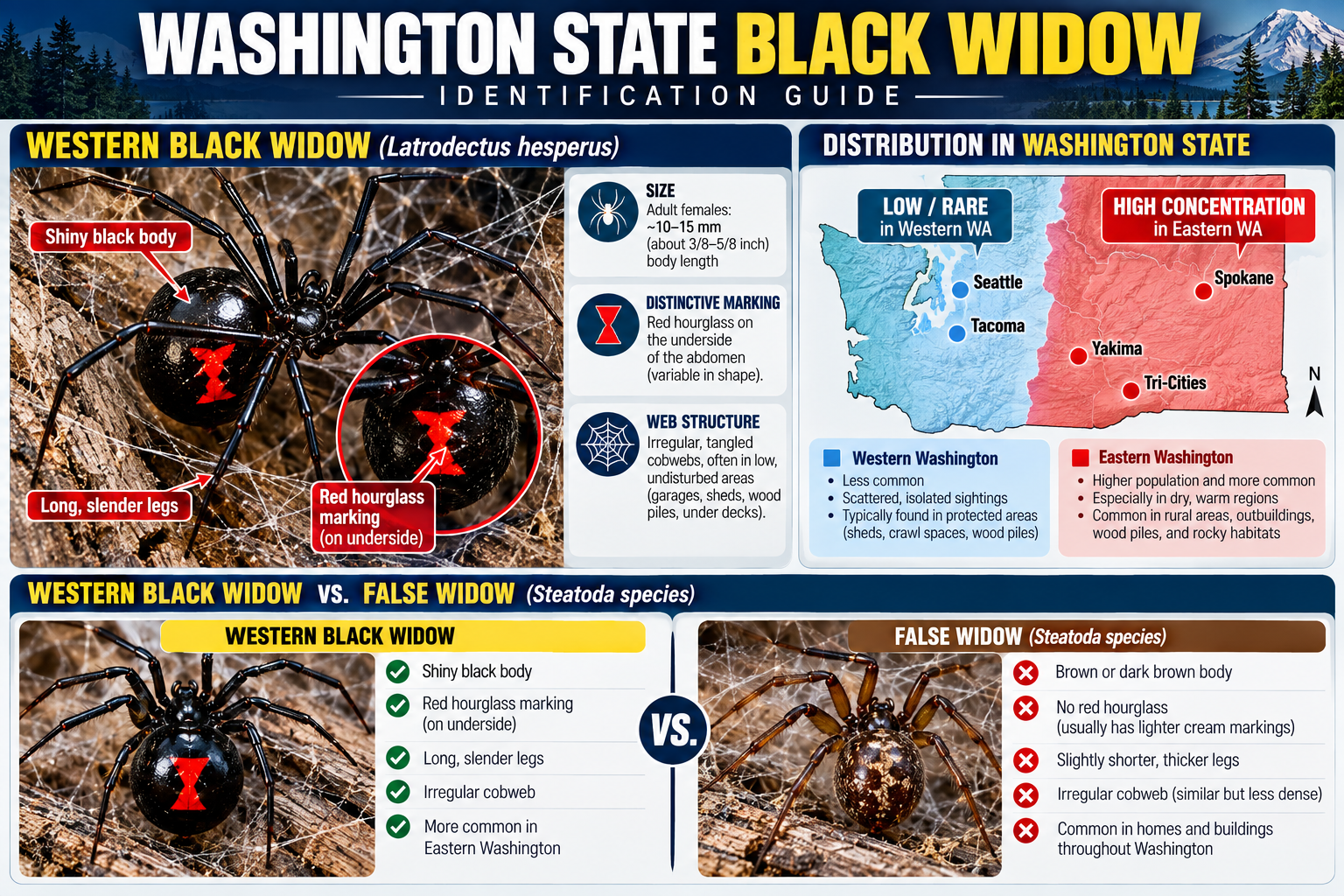
Geographic Distribution: Eastern WA vs. Western WA
The presence of black widows in Washington depends heavily on climate, humidity, and terrain:
- Eastern Washington (High Concentration): The arid, warm climates of the Columbia Basin, Yakima Valley, Tri-Cities, Spokane, and Wenatchee provide ideal habitats. Black widows are commonly found under rocks, sagebrush, agricultural outbuildings, and dry irrigation boxes.
- Western Washington & Puget Sound (Uncommon to Rare): The cooler, humid maritime climate of Seattle, Tacoma, Bellevue, and Everett is generally unfavorable for black widows. However, populations can establish indoors in heated garages, dry crawl spaces, or arrive via cargo shipments and imported firewood. If you’ve spotted arachnids indoors around Puget Sound homes, check our comprehensive guide on common Seattle house spiders and identification.
For seasonal pest protection strategies across all home structures, explore the Pest Control Services Nearby home page.
How to Identify a Western Black Widow
Accurate identification is crucial to avoid mistaking harmless house spiders for a venomous species:
- Color & Body Shape: Female Western Black Widows feature a shiny, jet-black body with a round, bulbous abdomen. They measure approximately 1.5 inches in total leg span.
- Red Hourglass Marking: Located on the underside (ventral side) of the female’s abdomen is a distinct reddish-orange hourglass marking. In immature females, this marking may appear yellowish or broken.
- Irregular Web Structure: Black widows do not weave symmetrical wheel-shaped webs. Instead, they build coarse, tangled, unorganized cobwebs near ground level. Their silk is exceptionally strong and feels sticky and coarse to the touch.
Comparison: Black Widow vs. Common Washington Lookalikes
| Spider Feature | Western Black Widow | False Widow (Steatoda grossa) | Giant House Spider |
|---|---|---|---|
| Body Color | Glossy jet-black | Dark purplish-brown / chocolate | Muted brown with dark tan stripes |
| Hourglass Marking | Bright red/orange on underside | None (May have faint pale oval spots) | None |
| Primary WA Region | Eastern WA (Rare in Western WA) | Very common statewide in basements | Abundant in Western WA & Seattle |
| Venom Severity | High (Neurotoxic – Requires medical care) | Mild localized pain (Non-dangerous) | Harmless to humans |
| Web Type | Tangled, coarse ground cobweb | Irregular corner cobweb | Flat funnel-shaped web in corners |
Black Widow Bite Symptoms & Health Risks
Black widows are non-aggressive by nature and typically bite only when squeezed, stepped on, or trapped inside clothing or work gloves. Their venom contains a potent neurotoxin known as alpha-latrotoxin.
Initial bite symptoms include a dull pinprick sensation followed by localized swelling. Within 1 to 3 hours, systemic symptoms may develop, including severe muscle cramping in the abdomen and back, nausea, tremors, sweating, and elevated blood pressure.
🚨 Emergency First Aid & Medical Protocol
If you suspect a black widow bite, wash the site with soap and water, apply a cold ice pack to slow venom absorption, elevate the limb, and seek immediate medical evaluation or call Poison Control at 1-800-222-1222. Seek emergency care immediately if the victim is a young child, older adult (over 65), or immunocompromised.
Preventing Spider Infestations Around Your Property
To prevent black widows and other crawling pests from establishing nests near your foundation, implement these exclusion steps:
- Clear Firewood & Debris: Store firewood stacks at least 20 feet away from exterior walls and elevate piles 6 inches off the ground.
- Seal Exterior Foundation Gaps: Use copper mesh and silicone sealant to block gaps around crawl space vents, pipe penetrations, and door sweeps.
- Manage Outdoor Lighting: Switch exterior floodlights to sodium vapor or yellow LED bulbs, which attract significantly fewer nocturnal flying insects that serve as spider prey.
- Wear Protective Gloves: Always wear thick leather work gloves when moving cardboard boxes, lumber, or clearing dark garage corners.
To protect your outdoor living areas from other aggressive summer pests, consult our complete guide on Pacific Northwest outdoor pest guides.
Frequently Asked Questions
Are black widows common in Seattle and Western Washington?
No. Black widows prefer dry, warm climates and are uncommon in Seattle and Western Washington. Most glossy dark spiders found in Western WA basements are harmless False Widows (Steatoda grossa).
How can I tell the difference between a Black Widow and a False Widow?
A Western Black Widow has a glossy jet-black body with a bright red hourglass marking on its underside. A False Widow is dark purplish-brown with no red hourglass marking.
Is a black widow spider bite fatal?
Fatalities from black widow bites are extremely rare due to modern antivenom and medical care. However, bites cause severe muscle pain and systemic symptoms requiring medical attention.