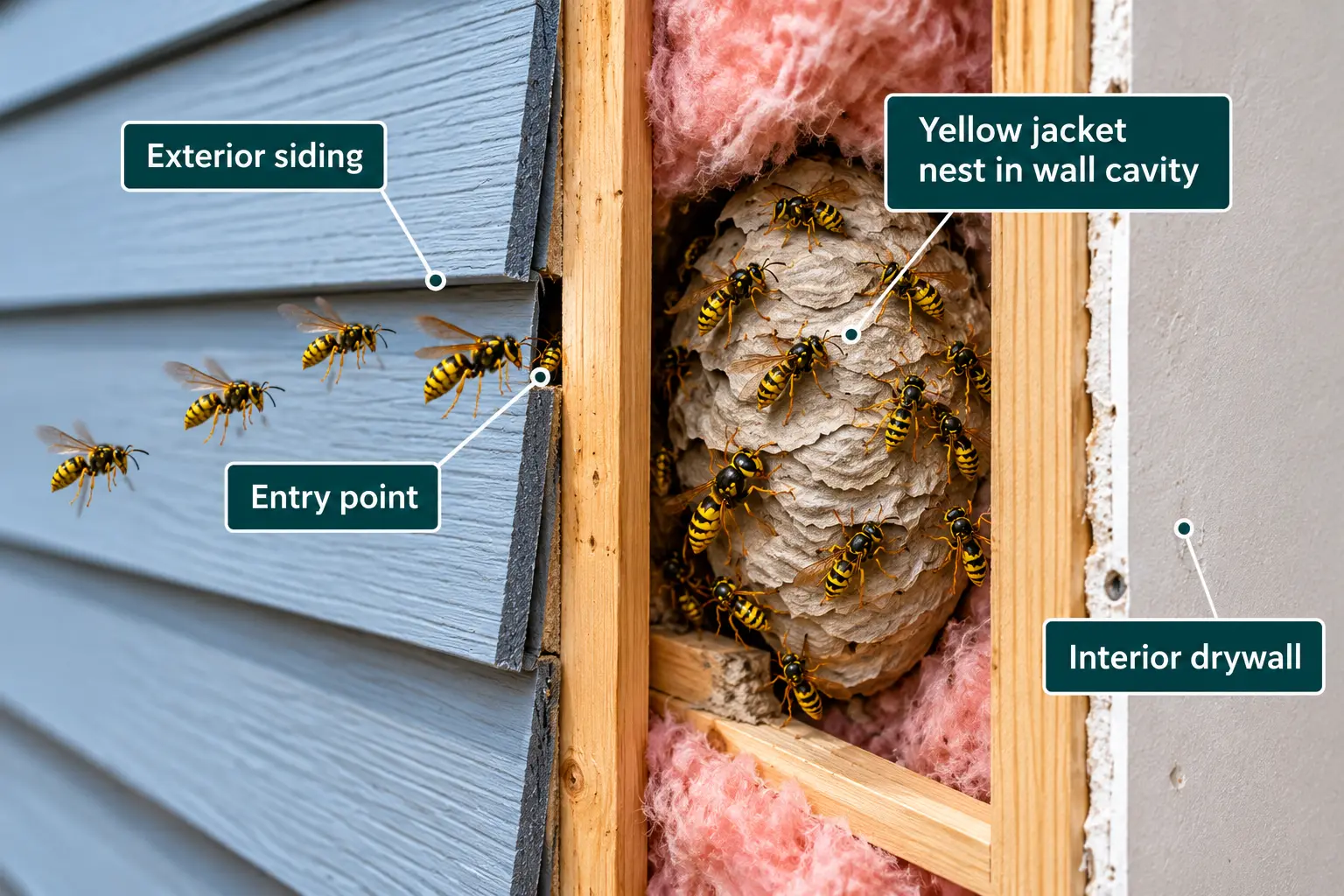
Yellow jackets in a wall often reveal themselves through repeated flights into one siding gap, buzzing behind drywall, or insects appearing inside rooms. Do not seal an active exterior entrance or open the wall. Keep people away, observe from a safe distance, and ask a licensed pest-control professional to assess the nest.
A hidden yellow-jacket nest can be difficult to identify because the colony may be concealed behind siding, drywall, or insulation. The right response depends on where the insects are entering, whether they pose an immediate sting risk, and whether the nest has already been treated.
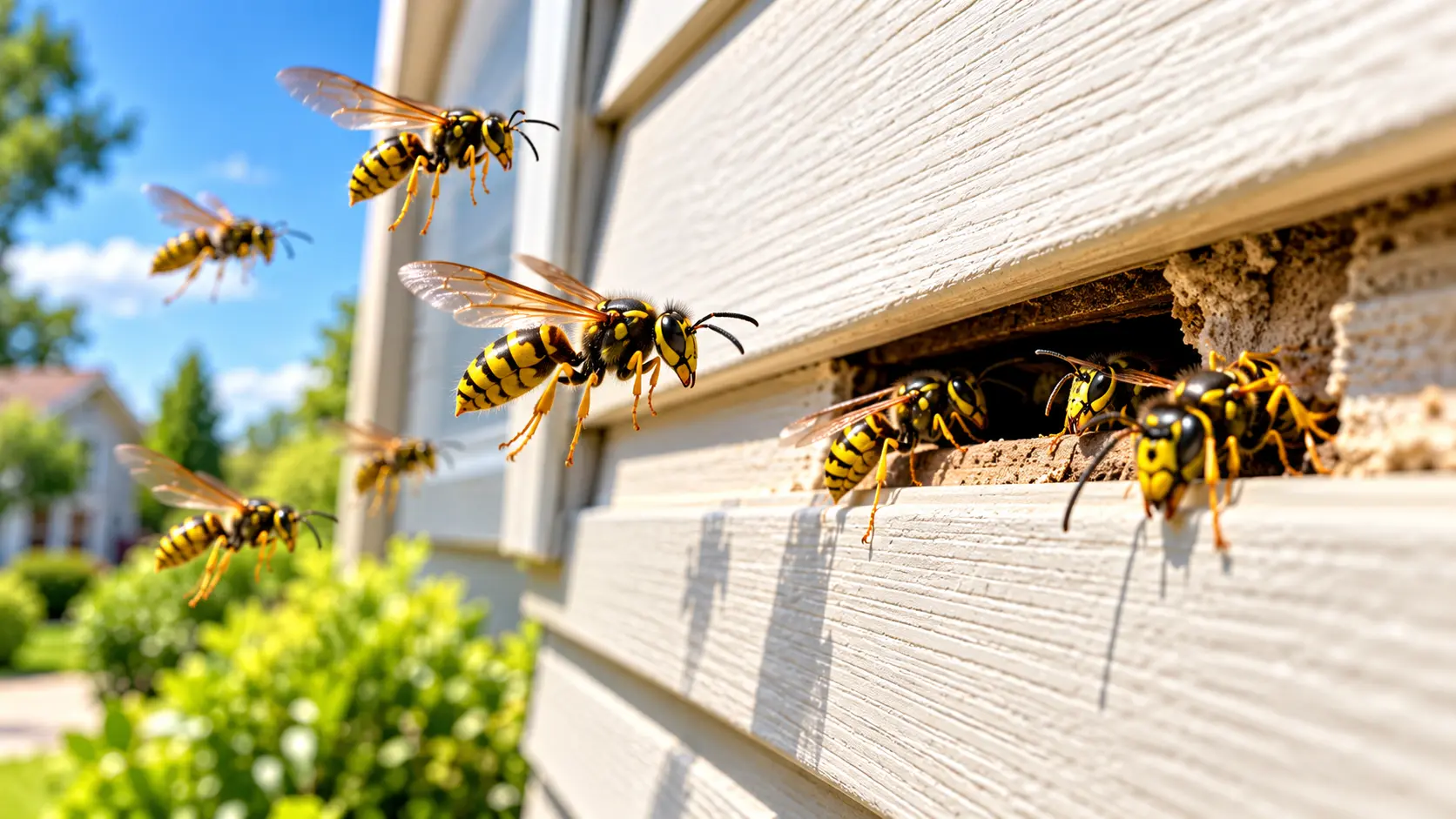
Yellow Jackets Entering Your Home’s Walls?
Seeing yellow jackets around your siding or hearing buzzing inside a wall? Ask about connecting with a local pest-control provider to discuss your concerns, possible inspection options, and appropriate next steps.
Discuss Your Pest Concern →Connections and services depend on ZIP code, pest type, and provider availability. Confirm yellow-jacket service availability before proceeding.
Safety first: If a person develops difficulty breathing, throat swelling, faintness, or other signs of a severe allergic reaction after a sting, seek emergency medical help. Do not disturb a suspected wall nest, cut into the wall, or seal an active nest opening.
5 Signs Yellow Jackets May Be Nesting Inside Your Wall
Yellow jackets build papery nests in protected cavities, including wall voids and attics. According to University of Minnesota Extension’s guide to wasps and bees, concealed yellow-jacket nests can be difficult to control and are generally best handled by pest-management professionals.
For help understanding the differences between stinging insects and when professional assistance may be appropriate, read our guide to wasp nest removal and identifying the right professional.
What Does a Yellow Jacket Nest in a Wall Sound Like?
A yellow-jacket colony hidden inside a wall may produce buzzing, humming, or light rustling. The sound can vary with the number of insects, nest activity, insulation, and wall construction.
A faint buzzing sound alone does not confirm a nest. It becomes more meaningful when combined with repeated insect traffic at a nearby exterior opening.
Do not tap, drill, or knock on the wall to provoke a response. Observe the suspected entrance from a safe distance and record where and when activity occurs.
Why Are Yellow Jackets Coming Inside the House?
When yellow jackets nest in a wall void, workers may find routes into living spaces through small interior gaps. In some cases, activity becomes noticeable only after the colony has grown substantially.
University of Minnesota Extension’s indoor yellow-jacket identification guide explains that workers may appear indoors when a nest is located within the structure.
If yellow jackets are entering a bedroom, kitchen, or living area, keep children and pets away from the affected space when possible. Contact a qualified professional rather than attempting to open the wall or block the exterior entrance.
What Not to Do When Yellow Jackets Are Inside a Wall
| Action | Why It May Cause Problems | Better Approach |
|---|---|---|
| Seal the exterior hole with foam or caulk | Workers may search for another exit, potentially entering the home. | Wait until the nest is confirmed inactive. |
| Cut into drywall to locate the nest | Opening the cavity may expose occupants to defensive insects. | Ask a qualified professional to assess the structure. |
| Spray randomly into siding gaps | The product may not reach the colony and may be unsuitable for the location. | Discuss appropriate structural-void treatment with a licensed provider. |
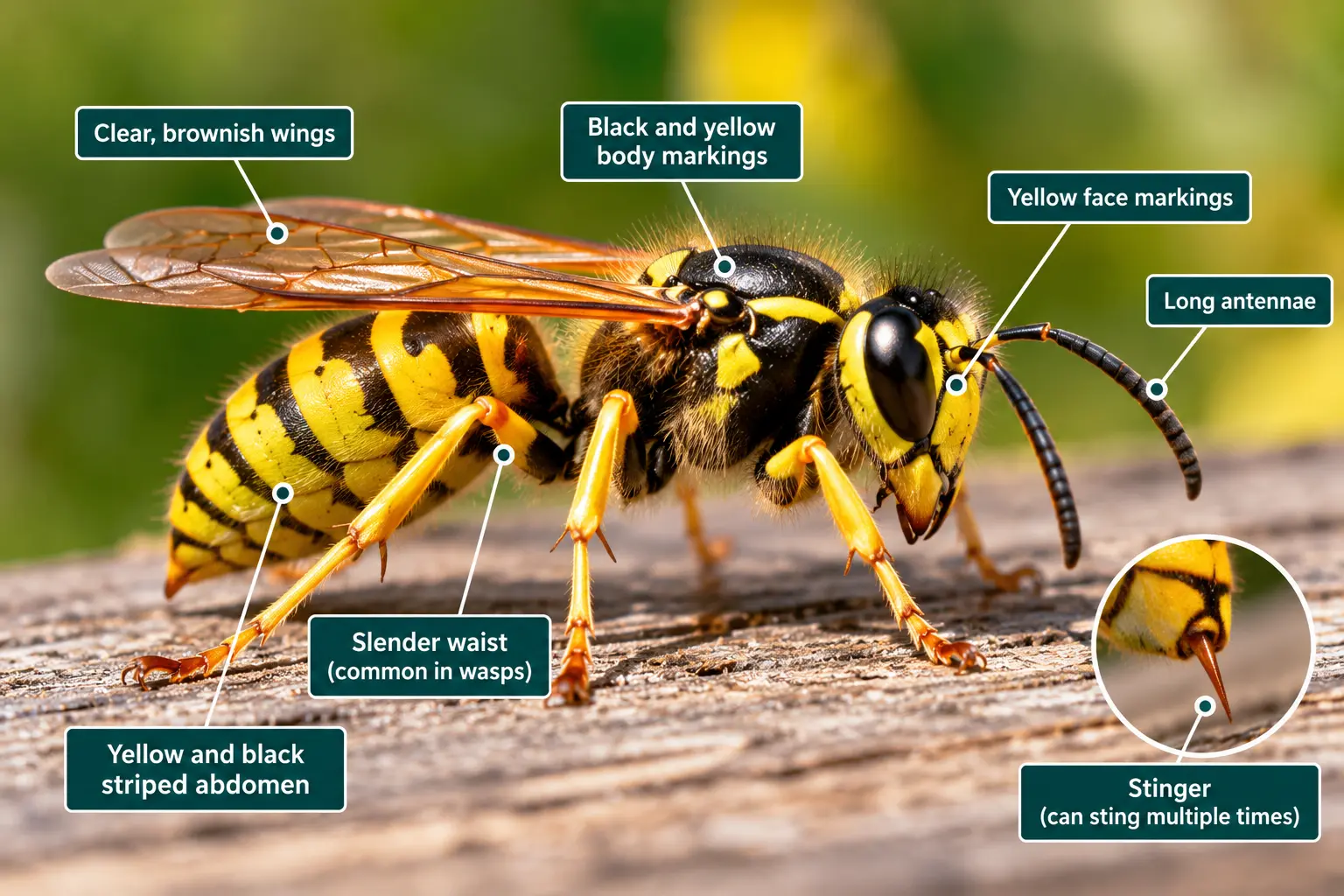
| Assume every yellow-and-black insect is a yellow jacket | Different species require different identification and management decisions. | Take a clear photograph from a safe distance when practical. |
| Ignore insects entering occupied rooms | Continued indoor activity may create a sting hazard. | Limit access to the affected area and seek professional advice. |
The University of Minnesota Extension’s hidden-nest guidance warns against sealing the nest entrance while yellow jackets are still alive.
Unsure Whether It’s Safe to Seal the Opening?
Before making siding or drywall repairs, discuss the activity with a local pest-control provider. Ask whether an inspection or treatment is appropriate and how to confirm that the nest is no longer active.
Ask About Local Provider Options →Treatment types, inspections, and provider connections vary by location and participating provider.
How Do Professionals Handle Yellow Jackets in Wall Voids?
A pest-control professional may begin by identifying the insect, locating the exterior entrance, evaluating the likely nest position, and assessing the risk to people using the property.
Unlike an exposed paper-wasp nest, a yellow-jacket colony inside a wall may be separated from the visible entrance by a concealed cavity. That can make ordinary surface spraying ineffective.
University of Minnesota Extension recommends professional management for hidden nests in buildings because these situations are more challenging than exposed nests.
What Should You Expect From an Inspection?
- Identification of the suspected insect.
- Assessment of visible entry and exit points.
- Discussion of where the colony may be located.
- Explanation of treatment options and their limitations.
- Safety precautions for occupants and pets.
- A follow-up plan for checking whether activity has stopped.
The provider should explain the recommended approach before work begins. Not every nest requires the same treatment, and physical removal is not always necessary.
Yellow Jackets Still Active After Treatment: Is That Normal?
Some yellow jackets may remain visible shortly after professional treatment. Workers that were away from the nest can return, and treatment effectiveness depends on whether the material reaches the colony and is appropriate for the location.
Continued activity does not automatically mean the treatment failed, but it should be assessed against the treating provider’s expected timeline.
What to Monitor After Treatment
- Whether insects continue entering the original exterior opening.
- Whether the number of yellow jackets appears to decrease.
- Whether insects begin appearing in new indoor locations.
- Whether activity increases rather than subsides.
- Whether a follow-up visit was included in the treatment agreement.
Contact the treating provider promptly if insects begin entering occupied rooms or activity increases. Avoid applying additional products or sealing openings without professional guidance.
Should You Seal the Opening Immediately After Treatment?
No. Reduced activity is not the same as confirmation that the colony is inactive. Ask the treating professional when it is safe to close the entrance.
Premature sealing can redirect surviving insects into another part of the structure.
Does a Yellow Jacket Nest Have to Be Removed From the Wall?
Not every inactive wall nest needs physical removal. The decision depends on nest size, accessibility, building materials, and whether the remains could attract other pests.
Removing a nest from behind drywall may require opening the wall and repairing the affected area afterward. In some cases, leaving an inactive nest in place is less disruptive.
Because yellow-jacket colonies are generally annual and old nests are not typically reused, the long-term prevention priority is to address suitable entry points once the nest is confirmed inactive.
University of Minnesota Extension explains that yellow-jacket nests are used for one season, although new queens may establish new colonies in suitable locations during subsequent seasons.
When Should Siding, Soffits, or Window Gaps Be Repaired?
Permanent exclusion work should follow confirmation that the colony is inactive. If you have planned window replacement, siding repair, or exterior painting, tell the contractor about the suspected nest before work begins.
Closing openings too early can create additional problems rather than solving the original issue.
Questions to Ask a Local Pest-Control Provider
Before choosing a company, ask questions that clarify both the treatment and the service agreement.
- Do you inspect or treat yellow-jacket nests inside walls?
- How will you determine where the nest is located?
- What treatment approach do you recommend for this situation?
- What precautions should household members and pets take?
- How soon should activity begin to decrease?
- What happens if yellow jackets continue appearing indoors?
- Does the service include a follow-up visit?
- Do you offer one-time treatment, or is a recurring contract required?
- Who is responsible for any necessary wall or siding repairs?
Independent providers may offer different pricing structures, one-time service options, and follow-up policies. Compare the actual scope of work rather than assuming that a lower initial quote includes everything.
Learn more about how Pest Control Services Nearby connects homeowners with independent providers.
Have Questions About a Hidden Yellow-Jacket Nest?
Whether you’ve discovered a new nest or are still seeing activity after treatment, a conversation with a qualified local pest-control provider can help clarify your options and the next steps.
Discuss Your Situation With a Local Provider →Provider availability depends on ZIP code, request type, and local capacity. Confirm that the provider handles yellow-jacket concerns before arranging service.
Frequently Asked Questions
Can yellow jackets chew through drywall?
In some situations, yellow jackets trapped in a wall cavity may chew through interior materials while searching for another exit. This is one reason not to seal an active exterior entrance.
Will yellow jackets in a wall go away during winter?
In colder climates, annual colonies typically die after freezing weather. However, immediate sting risks, local climate, and indoor activity should guide the decision about whether to wait or seek professional help.
Should I seal the hole where yellow jackets enter my siding?
Do not seal an active nest opening. Have the colony assessed and, if necessary, treated. Repair the opening only after confirming that the nest is inactive.
Can you hear yellow jackets through a wall?
Sometimes. A concentrated buzzing or rustling sound may indicate activity in a wall void, especially when insects repeatedly enter the same exterior opening. Sound alone is not enough for identification.
Why are yellow jackets still entering my house after treatment?
Some workers may remain active or return from foraging, and a concealed nest may need follow-up. Contact the treating professional for guidance, especially if insects are appearing in occupied rooms.
Do I have to remove a dead yellow-jacket nest?
Not necessarily. Physical removal depends on accessibility, possible secondary-pest concerns, and the extent of repairs required. A professional can help evaluate whether opening the wall is justified.
Do I need an annual pest-control contract for one yellow-jacket nest?
Not always. Some providers may offer one-time service, while others recommend recurring plans. Ask what is included, whether follow-up is provided, and whether a long-term agreement is optional.
Related Homeowner Resources
If you’re uncertain which stinging insect you’re dealing with, start with our guide to wasp nest removal. You can also review how our provider-connection process works before discussing your situation with a local company.
Sources and Further Reading
- University of Minnesota Extension — Wasps and Bees. Yellow-jacket identification, wall-void nests, nest management, and precautions against sealing active entrances.
- University of Minnesota Extension — Indoor Yellowjackets. Identification and why workers may appear inside buildings.
Editorial and service disclosure: This article provides general educational information and does not replace an on-site inspection. PestControlServicesNearby.com helps homeowners explore connections with independent local pest-control providers and does not directly perform pest-control services. Provider connections depend on ZIP code, request type, and participating provider availability. Confirm yellow-jacket service eligibility, licensing, insurance, pricing, and treatment terms directly before arranging service.