📍 Local Service Note: This Tacoma rat exclusion guide is specifically engineered for homeowners in Tacoma, WA, and the South Puget Sound region (including the North End, Hilltop, Proctor, and Lakewood). To verify participating provider availability for your specific ZIP code, call our regional routing line directly at (833) 764-0523.
Tacoma Rat Exclusion & Foundation Sealing: Protecting Subfloors and Wall Voids in South Puget Sound Homes
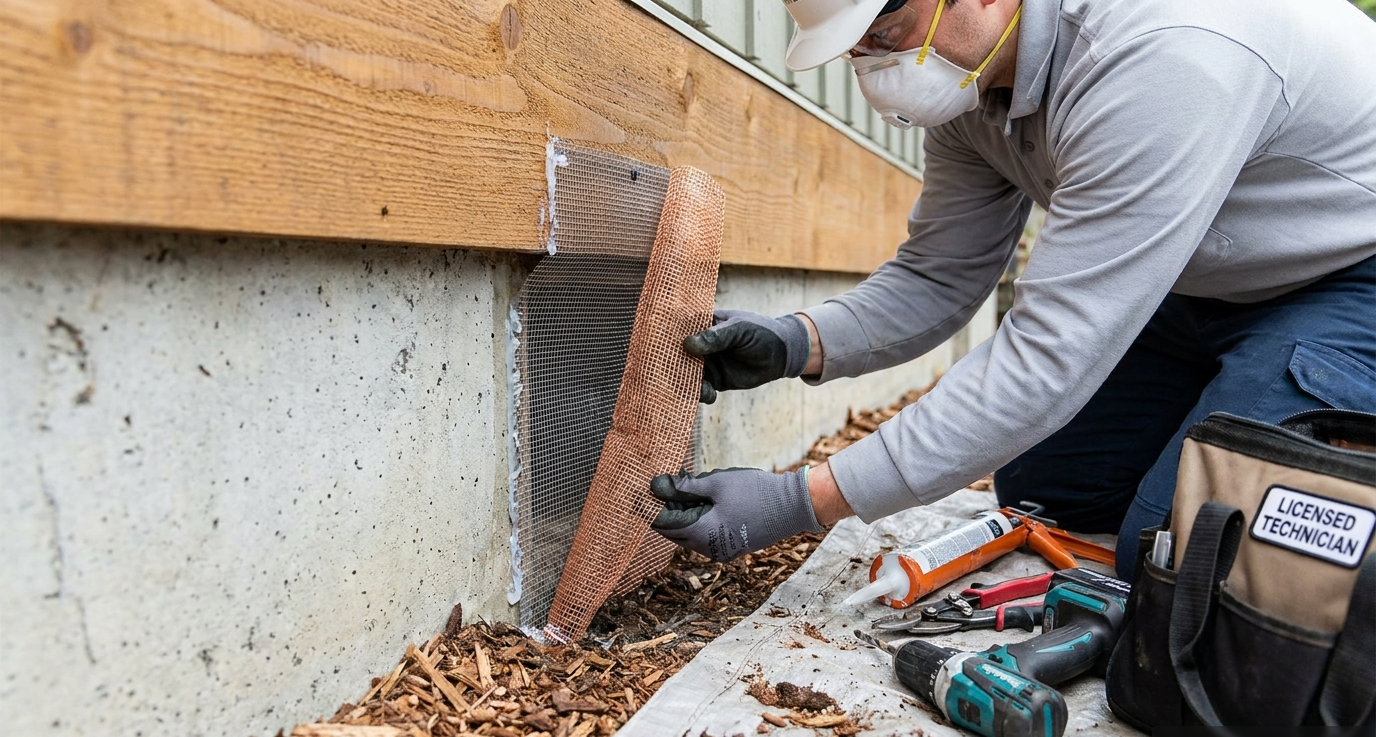
Tacoma rat exclusion becomes a critical priority as autumn rain and maritime dampness settle over Commencement Bay and Pierce County. Consequently, local rodent pressure shifts dramatically indoors as rat populations seek heat and nesting shelter inside residential subfloors. In established Tacoma neighborhoods, where craftsman homes, older framing, and damp crawl spaces abound, unsealed foundation voids act as open invitations for rats.
Relying solely on snap traps, poison baits, or scent-based repellents addresses only temporary symptoms. Furthermore, DIY methods leave subfloor timbers and electrical wiring exposed to continuous damage. Sustainable, long-term rodent control requires structural Tacoma rat exclusion: the physical process of identifying, sealing, and fortifying every potential entry point along your home’s foundation, crawl space, and roofline. For related pest challenges, you can also read our guide on Tacoma carpenter ant subfloor moisture control.
1. Norway Rats vs. Roof Rats: Understanding Tacoma Rat Exclusion Needs
Tacoma homeowners routinely encounter two distinct rodent species. As a result, each species exploits different structural weaknesses:
- Norway Rats (Brown Rats): Heavy-bodied burrowers that primarily attack the lower perimeter of a home. Specifically, they dig beneath foundation footings, exploit unsealed crawl space access doors, enter through damaged garage door weather stripping, and chew through unshielded utility line penetrations.
- Roof Rats (Black Rats): Agile climbers that utilize overhanging Douglas fir branches, power lines, and trellis structures to access upper rooflines. In addition, they enter homes through unmeshed attic gables, loose soffit vents, and gaps where fascia boards meet the roofline.
Because rodents possess soft, flexible skeletal structures, an adult mouse can squeeze through an opening as small as a pencil (1/4 inch or 6 mm). In contrast, a rat requires a gap no larger than a quarter (1/2 inch). Once inside, they nest in subfloor thermal insulation, chew through plastic PEX plumbing lines, and contaminate crawl space vapor barriers. Learn more about structural vulnerability in our Seattle crawl space and attic sealing guide.
Suspect Active Rodents in Your Crawl Space or Attic?
Connect with a licensed local pest control professional in Tacoma to schedule a comprehensive foundation and entry-point inspection.
📞 Call (833) 764-0523 for Local Availability2. Crucial Health & Safety Protocols: The Aerosolization Hazard
When dealing with active rodent harborages, homeowner safety must come first. In Washington State, the deer mouse serves as the primary reservoir for Hantavirus Pulmonary Syndrome. According to the Washington State Department of Health (WA DOH), this infection carries a high mortality rate if contracted.
⚠️ CDC Safety Warning: Never Vacuum or Sweep Rodent Waste
The Centers for Disease Control and Prevention (CDC) explicitly instructs homeowners: NEVER vacuum or dry-sweep rodent droppings, urine, or nesting materials. Vacuuming or sweeping aerosolizes microscopic viral particles directly into the indoor air supply.
Official CDC Decontamination Steps:
- Ventilate: Open crawl space hatch doors or exterior windows for 30 minutes prior to entering or cleaning.
- Saturate: Thoroughly spray waste, droppings, and dead rodents with an EPA-registered household disinfectant or a freshly mixed bleach solution (1.5 cups bleach per 1 gallon of water). Refer to official EPA rodent control guidelines for approved sanitizers.
- Soak Time: Allow the disinfectant to soak for at least 5 minutes to neutralize pathogens completely before wiping.
- Dispose Safely: Wipe wet materials with paper towels, double-bag the waste in heavy plastic trash bags, seal tightly, and wash gloved hands with soap and warm water.
3. The 4-Step Physical Tacoma Rat Exclusion Protocol for Foundations
To permanently rodent-proof a property, technicians execute a 4-step structural Tacoma rat exclusion protocol using chew-proof building materials:
Step 1: Complete Perimeter & Elevation Audit
First, inspect the exterior foundation line, paying close attention to utility penetrations (gas lines, hose bibs, electrical conduits), basement window wells, trailer skirting, and gaps between siding and concrete sills. Furthermore, inspect rooflines, soffits, and fascia junctions for roof rat access points.
Step 2: Install Chew-Proof Foundation Barriers
Rodents easily chew through expanding spray foam, rubber, and plastic sheeting when used alone. Therefore, fill small gaps with heavy-grade copper mesh or stainless steel wool, then embed the mesh in silicone caulk or masonry hydraulic cement. For larger voids, install 1/4-inch galvanized hardware cloth or sheet metal flashing.
Step 3: Secure Crawl Space & Subfloor Access Points
Next, repair or replace damaged, rotting wood crawl space door frames with custom metal-flashed frames. In addition, ensure crawl space foundation vents are fitted with intact 1/4-inch steel hardware cloth screens to allow ventilation while completely blocking entry.
Step 4: Vegetation Pruning & Environmental Sanitation
Finally, trim overhanging tree branches at least 6 to 10 feet back from rooflines to deny roof rats aerial bridges. Consequently, move firewood piles at least 100 feet away from the home foundation and elevate them 12 inches off the ground. Secure household waste in thick metal or heavy plastic garbage cans with tight-fitting lids. To understand why natural repellents fail during this stage, read our article on why DIY peppermint spray fails against Northwest rodents.
4. Financial Reality: Proactive Tacoma Rat Exclusion vs. Reactive Restoration
Rodents cause massive annual property damage across the United States. Furthermore, because rodents must constantly gnaw to wear down their teeth, they frequently target plastic-insulated electrical wiring. As a result, rodent gnawing contributes significantly to unexplained residential electrical fires.
| Service Scope | Estimated Investment | Long-Term Property Impact |
|---|---|---|
| Proactive Tacoma Rat Exclusion & Sealing | $250 to $1,500 | Permanently blocks foundation entry points; prevents wiring destruction and insulation contamination. |
| Crawl Space / Attic Insulation Replacement | $2,000 to $4,000+ | Requires full removal of contaminated subfloor or attic insulation, sanitization, and reinstalling R-value barriers. |
| Severe Infestation & Structural Restoration | $5,000 to $20,000 | Includes electrical rewiring, subfloor joist repairs, complete decontamination, and full envelope sealing. |
Frequently Asked Questions: Tacoma Rat Exclusion
Q: How much does it cost for pest control to remove a rat in Tacoma, WA?
A: Initial professional rodent trapping, inspection, and foundational entry point sealing in Tacoma typically range from $250 to $1,500 depending on home size and access conditions. However, severe infestations requiring full subfloor decontamination and attic insulation replacement can reach $5,000 to $20,000. For localized service pricing across Pierce County, view our Tacoma pest control hub page.
Q: What does pest control do on a first visit for rodents?
A: On an initial visit, a licensed technician performs a 360-degree inspection of accessible crawl spaces, attics, foundations, and rooflines to identify rodent species and locate active entry voids. In addition, they map out active runways, place targeted indoor traps, and provide a transparent quote for sealing exterior structural gaps.
Q: What are the early signs that I need rodent pest control?
A: Common indicators include nighttime scratching or scurrying noises in wall voids or ceilings, dark capsule-shaped droppings along foundation sills or under sinks, gnawed food packaging, torn insulation, and stale, musky odors in hidden storage areas.
Q: Can I stay in my house during a Tacoma rat exclusion treatment?
A: Yes. Physical structural exclusion, such as sealing foundation gaps with steel mesh, caulk, and hardware cloth, is completely non-toxic and requires zero household evacuation. Furthermore, any reduced-risk indoor trapping or placement is targeted specifically in non-living crawl spaces or wall voids.
Protect Your Tacoma Property Against Winter Rodent Invasions
Don’t wait for unsealed foundation gaps to result in costly crawl space insulation damage. Connect with an authorized South Puget Sound residential provider today.
📞 Call (833) 764-0523 to Check Local ZIP Availability